

Uncategorized · June 2026 · 7 min read
I still remember the first “smart” house I walked through in Toronto — a Forest Hill rebuild where the client proudly showed me a single tablet bolted to the kitchen wall. It controlled the lights. That was 2014. Fast forward a decade, and the conversation around new technology in luxury home in Toronto has shifted from novelty to necessity. We are past the era of gimmicks. What clients now expect — and what we deliver at Amista Homes — is a residence where technology disappears into the architecture, where the systems feel inevitable rather than imposed.
Toronto’s luxury market has matured fast. In the Bridle Path, Rosedale, and the newer pockets around Yorkville and the Kingsway, the expectation is no longer a rack of remotes but a calm, orchestrated environment. I have watched clients move from “I want a smart thermostat” to “I want every room to know what kind of day it is.”
Three forces drive this evolution:
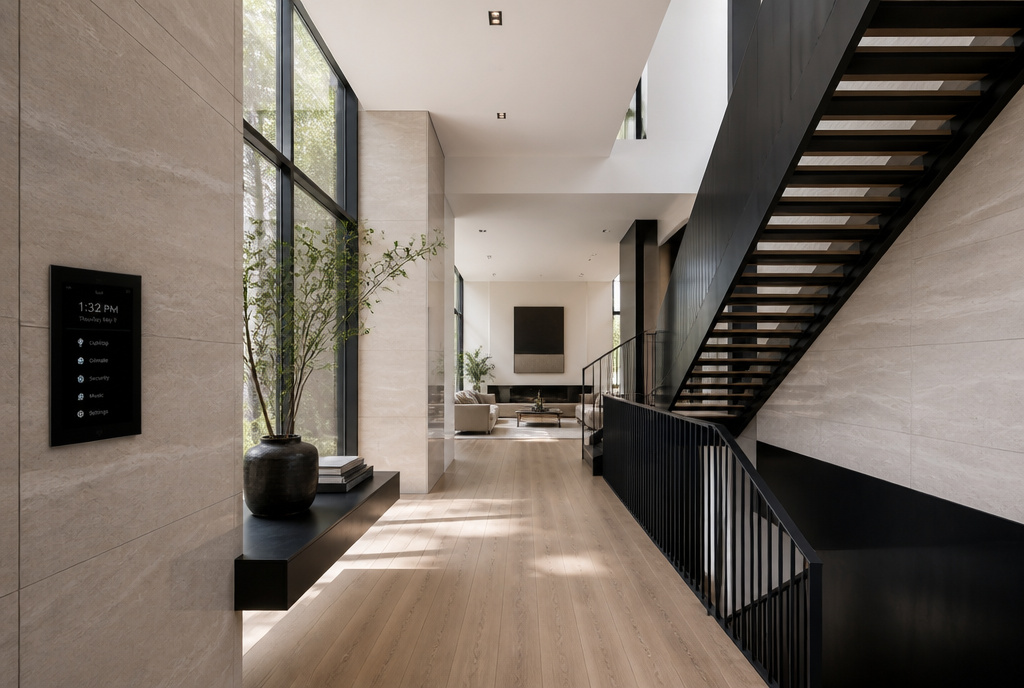
The result? Smart home technology Toronto buyers once treated as a splurge is now treated as infrastructure, on par with heated driveways and backup generators.
Integration is where most projects succeed or quietly fail. On a recent Annex renovation, we coordinated four trades around a single Crestron backbone — lighting, shading, audio, and HVAC all speaking the same language. The homeowner controls the entire four-storey residence from one interface, with no app-juggling.
For our clients, the value of integrated home design Toronto projects deliver is not flashy — it is the absence of friction. Nothing clicks. Nothing whirs. The house simply responds.
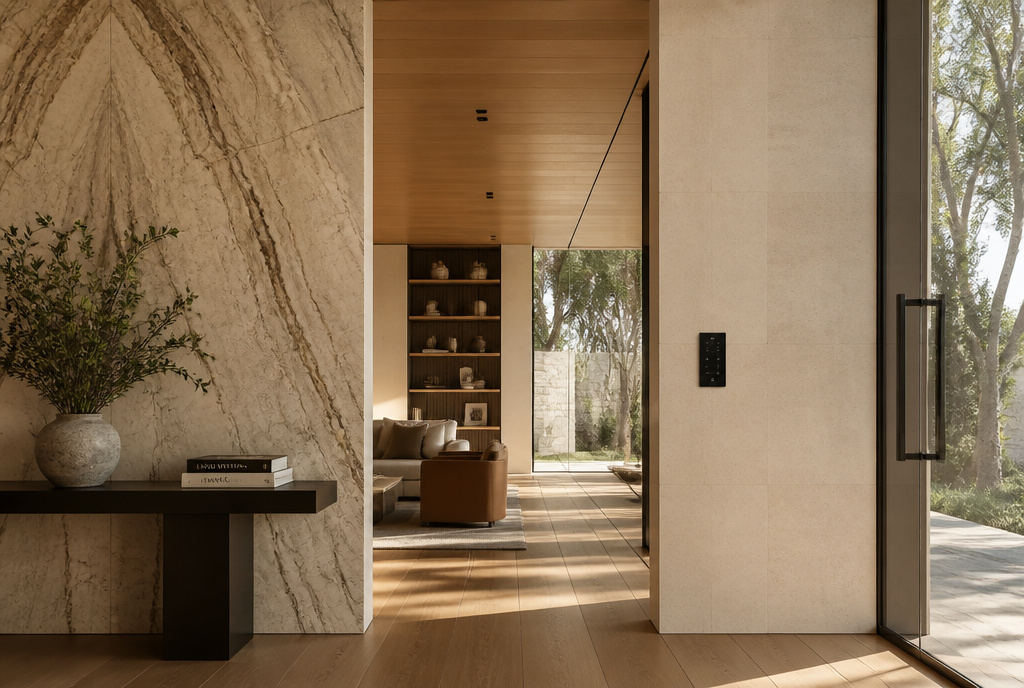
This is the area where my team spends the most pre-construction time, and where the payoff is most visible. We treat lighting and climate as architectural elements, not afterthoughts.
“A Lutron keypad costs almost nothing in a $5M build. The discipline to plan its location twelve months before move-in is what separates a smart house from a luxury one.”
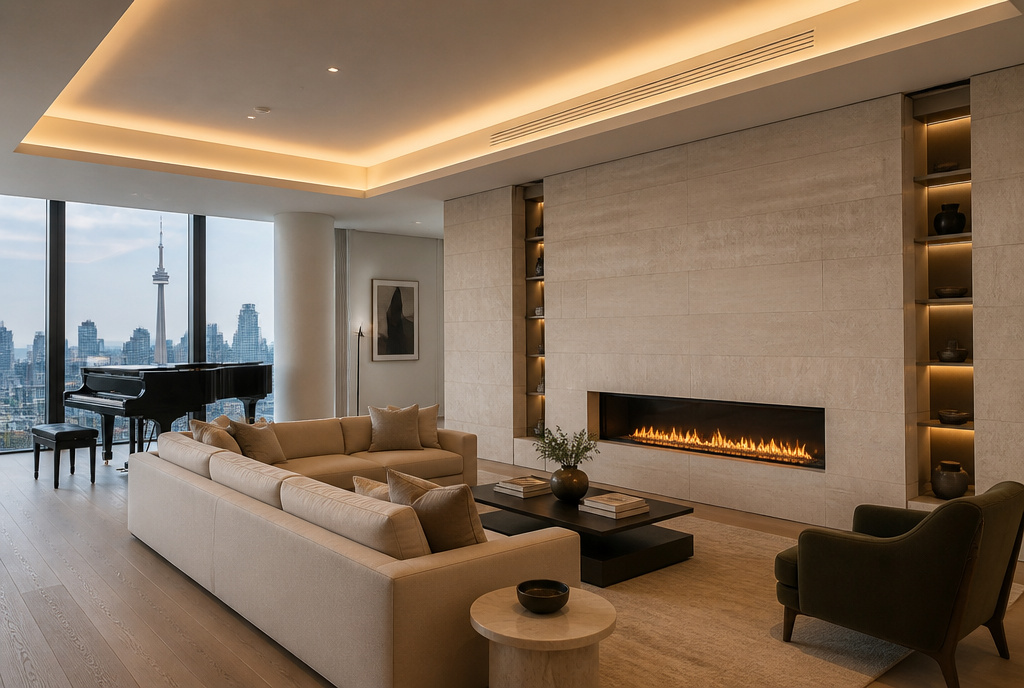
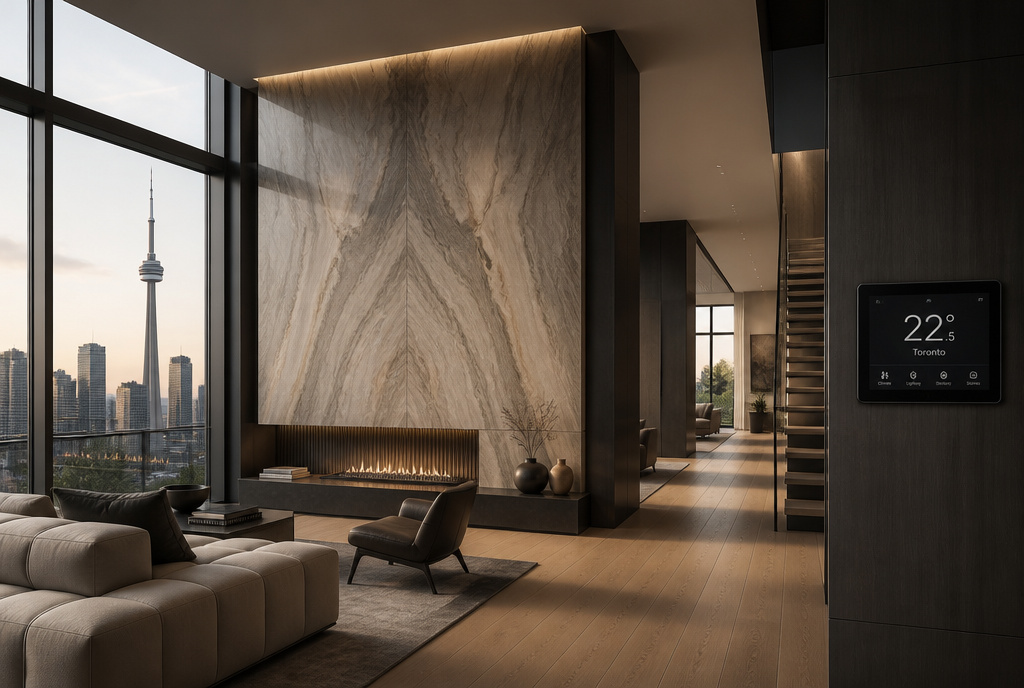
On a Lawrence Park custom home, we recessed linear LEDs into rift-cut white oak panels, dimmed to 1% for late-night navigation, and tied the gas fireplace, underfloor heating, and ERV into a single climate scene. The owner steps in from the cold, taps “Evening,” and the house reorganizes itself around them.
This is where luxury home automation systems earn their keep: not by adding screens, but by removing decisions.
Security used to mean a loud panel by the mudroom door. The new baseline is quieter, smarter, and far less conspicuous.
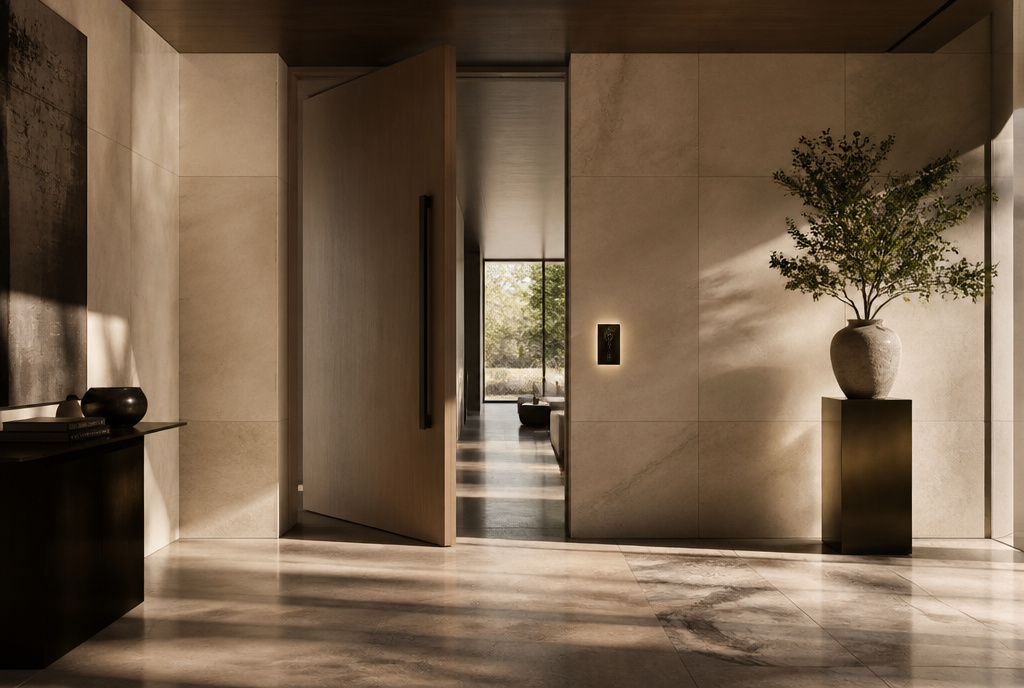
For Toronto’s connected luxury residences Toronto buyers now commission, advanced security is less about guarding against the dramatic and more about curating who arrives, when, and how. The technology fades; the sense of calm stays.
Sustainability is not a marketing line for our clients — it is a line item they scrutinize. Smart infrastructure pays back in two ways: lower operating cost and tighter envelope performance.
On a Leaside infill, we tied the geothermal loop, the triple-glazed curtain wall, and the heat-recovery ventilator into one monitoring dashboard. The owner pulls up the data monthly. Year one showed a 38% reduction in heating load against the neighbourhood baseline — verifiable, not anecdotal.
Other pieces we regularly specify:
Here is the part most integrators will not tell you: technology is the easiest piece. The discipline is sequencing it into the build. We map every low-voltage run against the millwork shop drawings, the HVAC layout, and the lighting design before drywall closes. We revisit the spec at every milestone. We pressure-test the integrator the same way we pressure-test the framer.
Our promise is straightforward — every Amista residence is delivered with a technology stack that can be upgraded, not replaced. Conduit is oversized. Equipment closets are conditioned. Documentation is handed over in a labelled binder and a digital twin. You should not have to tear out a wall to add a sensor in 2032.
If you are weighing a custom build or a deep renovation, bring us into the conversation early. The smartest houses I have built in Toronto all started with one decision: to treat new technology in luxury home in Toronto as architecture, not appliance.
How early should smart home technology be planned in a Toronto custom build?
Ideally during schematic design. Low-voltage rough-in needs to be coordinated with framing, HVAC, and millwork — moving it later costs both money and ceiling height.
Are wireless smart systems reliable enough for a large luxury residence?
Yes, when the network is professionally designed with hardwired backhaul and commercial-grade access points. Pure consumer Wi-Fi will struggle in a 6,000+ sq ft home.
What does an integrated smart home system typically cost in Toronto?
A full-stack system for a custom residence usually lands between 2% and 5% of construction value, depending on scope. The higher end covers lighting, shading, audio, climate, security, and networking as one coordinated package.
Can smart technology be added to a heritage or existing luxury home?
Absolutely. Wireless retrofits, surface raceways painted to match trim, and fixture-level smart controls can transform an older home without disturbing its character — provided the network backbone is sound.
How does Amista Homes approach transparency around technology costs?
Every line item is itemized. Clients see the hardware, the labour, the integrator markup, and the ongoing service terms before signing. No black boxes, no surprise change orders at trim-out.